Blockchain technology incentivizes households and MRFs to streamline recycling industry funding

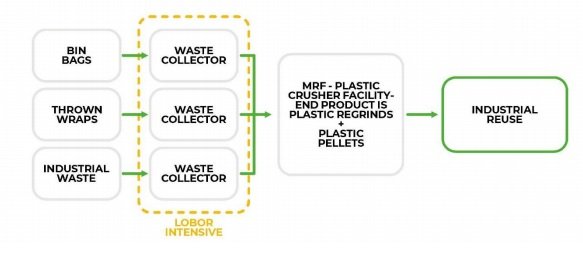 Using blockchain and DApps, Plastic Finance can streamline the recycling business flow and empower scavengers so they get better care for their hard work. Plastic Finance will create an application that waste pickers can use to sell their waste to MRF, exchange it for cash or store it as an asset in the form of grind stable coins that can be pledged on our DeFi platform.What is PLAS Token?PLAS is the native token of the Plastic Finance ecosystem. PLAS was created to fund the Recycling project and serves as a governance and ownership token for earning student dividends or profit sharing from recycling and DeFi transactions, Internal Exchange spreads.Plastic Finance will collect a 5% fee from the price of the plastic internal exchanger spread, and a 0.175% fee from a savings withdrawal transaction or loan payment on the DeFi platform. All these fees will be collected in the wallet and using a smart contract, can be distributed regularly.Plastic Finance collects 60% of its net profit annually from the cooperative’s recycling business. In turn, Plastic Finance will distribute costs and profit sharing as dividends to PLAS holders.TokenomicsTicker: PLASToken Type : BEP-20 MainNetToken Address : 0xCe34caAEe0b691F8e4098DC31CC8818A1dCcF06AToken Sale Address : 0x1800C25a3Ed60B41766B8EE94f40CE05A84407aBTotal Token Supply : 23,900,000 PLASProfit Sharing Scheme
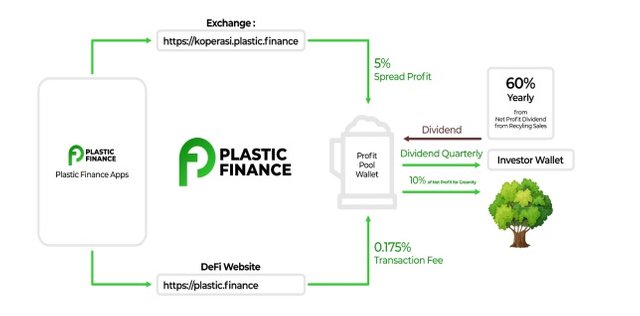 Plastic Finance distributes 10% of our dividend profits for reforestation projects per tonne per day and recycling can be channeled to purchase seedlings of 500-1280 teak trees, which is equivalent to 10Kg of CO2 absorption per year per tree.Plastic financing through its MRF takes the circular economy flow one step further by dedicating a program of planting a certain amount of trees (in collaboration with certified growers organizations such as SINERGI FOUNDATION) for every amount of plastic recycled so token holders will simultaneously address 3 issues in at the same time, namely recycling plastic waste, scavenging communities & financial inclusion and carbon sequestration through tree plantingOne tree can contribute to the absorption of 10Kg of Co2 per year, so the initiative will contribute to the potential for Decarbonization of 21,000-40,000 tons of CO2 during 3 years of operation.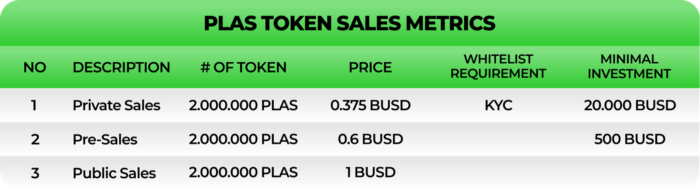





 CRYPTONEWS